
Korean cuisine was one of the things I was looking forward to experiencing in Korea. In every Korean show I’ve watched, there is always a scene that takes place over a meal of various dishes I have never seen before in my life but look incredibly delicious. Getting to try diverse dishes was one of the things I was excited to do while on this program, and eating at the cafeteria has let me try foods I had eaten in America, dishes I had only seen in pictures, and dishes I had never even heard of before.
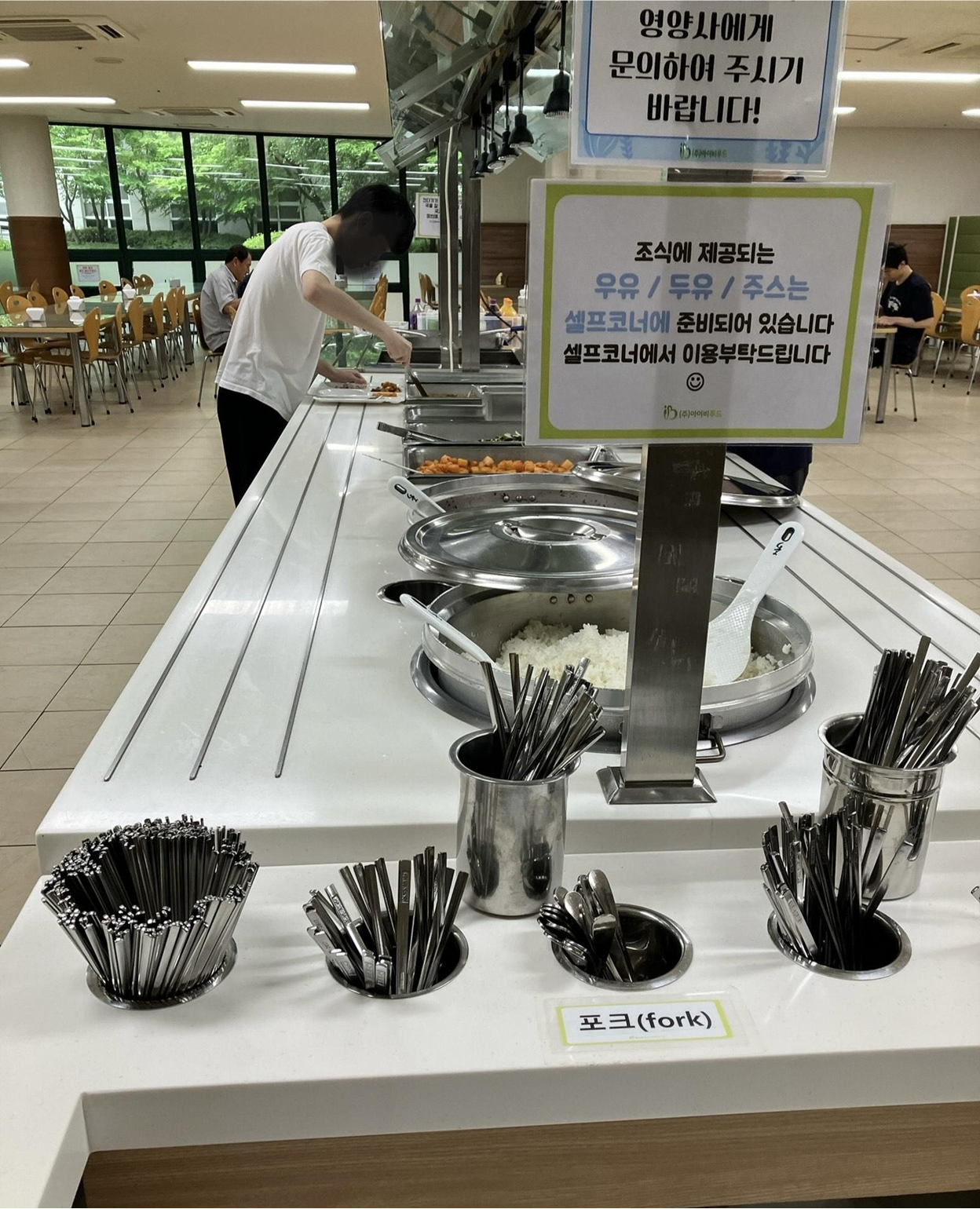
The way the cafeteria works at Chungbuk National University is that there is a bar with two lines where you can take your platter and serve yourself.
The normal utensils are chopsticks and a spoon, but the cafeteria also has forks for the international students. The food line begins with two types of rice: plain white rice (쌀밥) and multigrain rice (잡곡밥). After that is usually a type of kimchi; in the photo above it is cubed radish kimchi (깓두기). There is also another type of side dish, and then at the end is the main dish and a soup. This is what it looks like once you’ve served yourself:
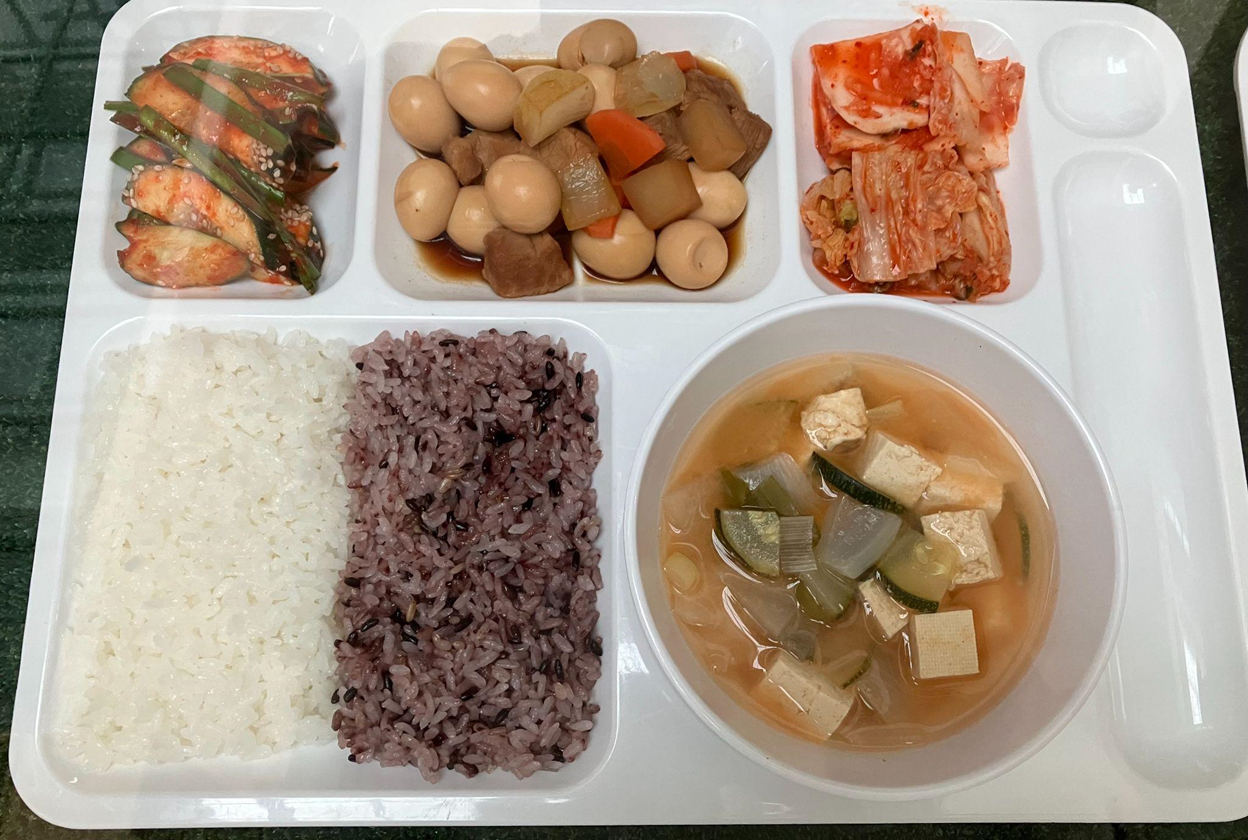
At the top right, the side dish is spicy cucumber and chive salad (아삭한 오이부추무침); next to it is boiled quail eggs and braised pork (돈육 메추리알 장조림) for the main dish, and traditional cabbage kimchi. The soup here is spicy soybean paste stew (청양초 된장찌개) with zucchini, radish, and tofu. The flavor and texture was almost the same as boiled chicken eggs, just a bit more chewy. The eggs had absorbed some of the sauce, adding extra depth to the flavor.
All of the meals have this general structure: rice, kimchi, side dish, main, and soup. And I mean all the meals: breakfast, lunch and dinner. As a matter of fact, the meal above was served for breakfast. There really aren’t sweet breakfasts like pancakes or French toast. On a few occasions they have served some types of white bread with jam on the side or croissants for breakfast, but it’s not nearly as common as a savory meal like the picture above.
One of my favorite soups in Korea is seaweed soup (미역국). You can see it here at the bottom right of the photo:
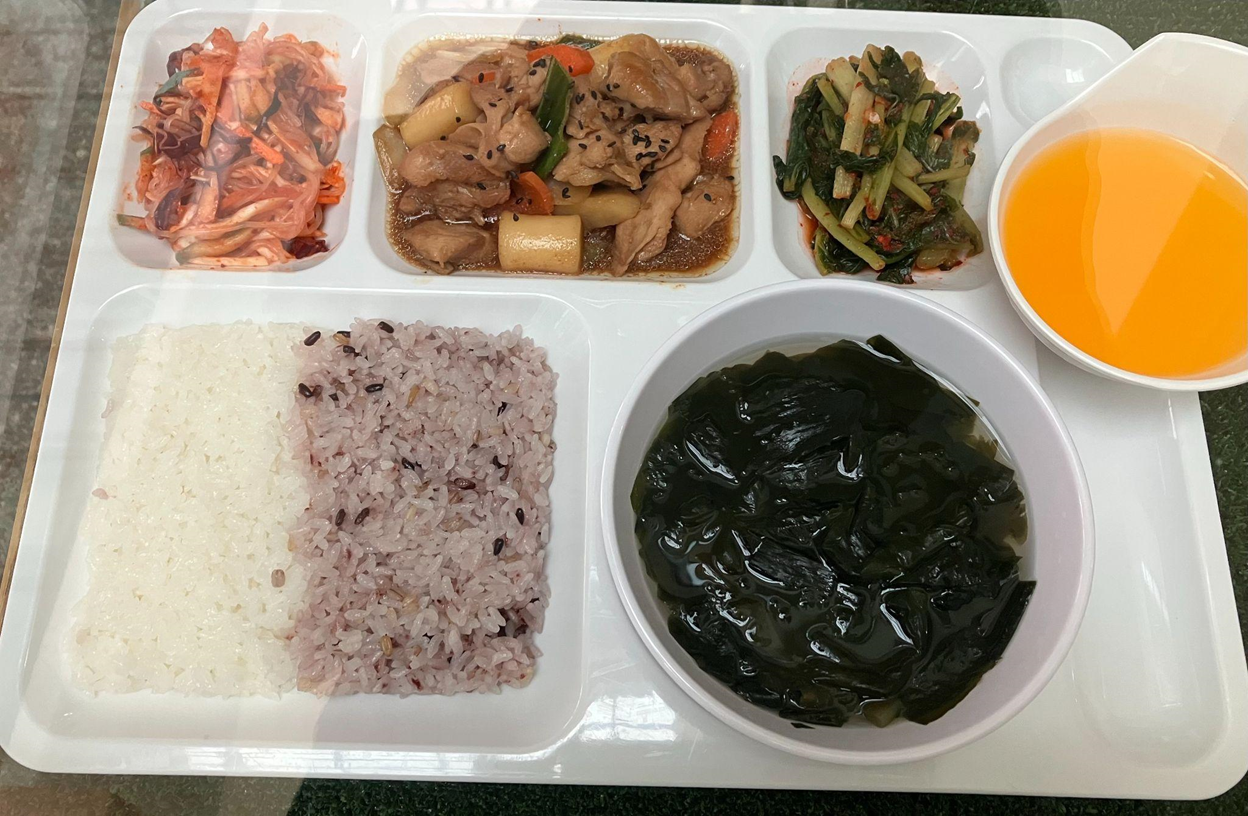
In Korea, seaweed soup is a traditional birthday dish. Because seaweed is rich in iron, calcium and iodine, mothers eat seaweed soup for weeks after giving birth to help with recovery. Eating it on your birthday is to honor your mother’s work in giving birth to you. There is also a superstition about seaweed soup that students have: they avoid eating it around exam periods because the slippery texture of the soup symbolizes “slipping” or failing an exam. This soup has been served at least once a week at the cafeteria since I’ve been here, but I don’t think it’s affected my test scores.
Another popular dish is jjajangmyeon (짜장면), noodles in black bean sauce.
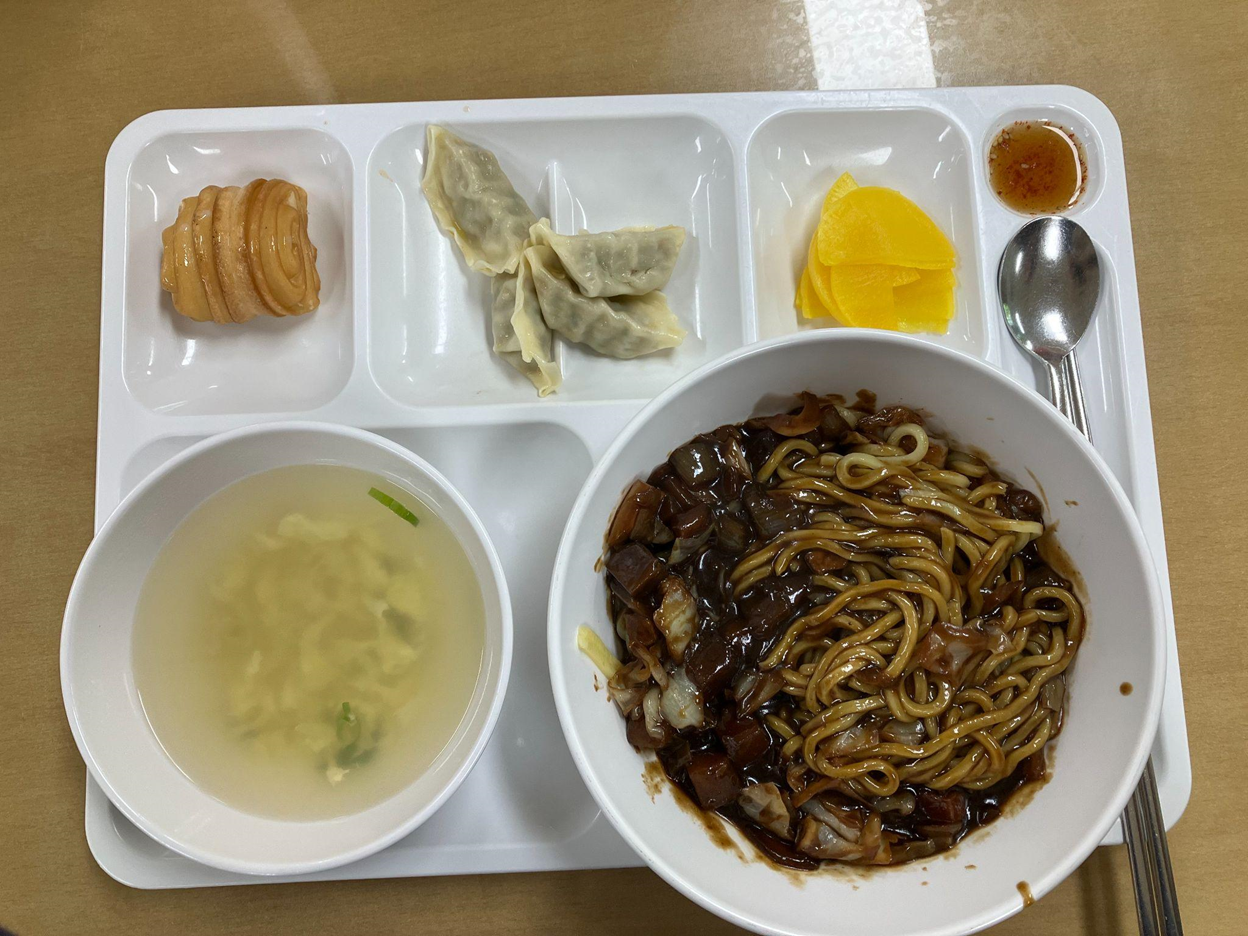
This was served at a lunch, alongside with egg soup, gyoza mandu, pickled radish, and fried flower milk bread (연유꽃빵튀김). Jjajangmyeon is often eaten after moving into a new house because of the the convenience and affordability, similar to eating something like pizza on a moving day in the States. The dish is very simple: chewy wheat noodles in a black bean sauce with a mix of vegetables and meat; this one had onion, cabbage, potato, and pork. Black bean sauce might seem strange, but the texture was smooth and rather than being bean flavored, it was sweet with a bit of a soy umami taste.
The cafeteria has also served other cultures’ cuisines: there was a Caesar salad one day (oddly enough it was served with breakfast), and even an alfredo pasta! One day they served a tasty Japanese lunch: ramen with takoyaki, salad, and pickled ginger and radish.
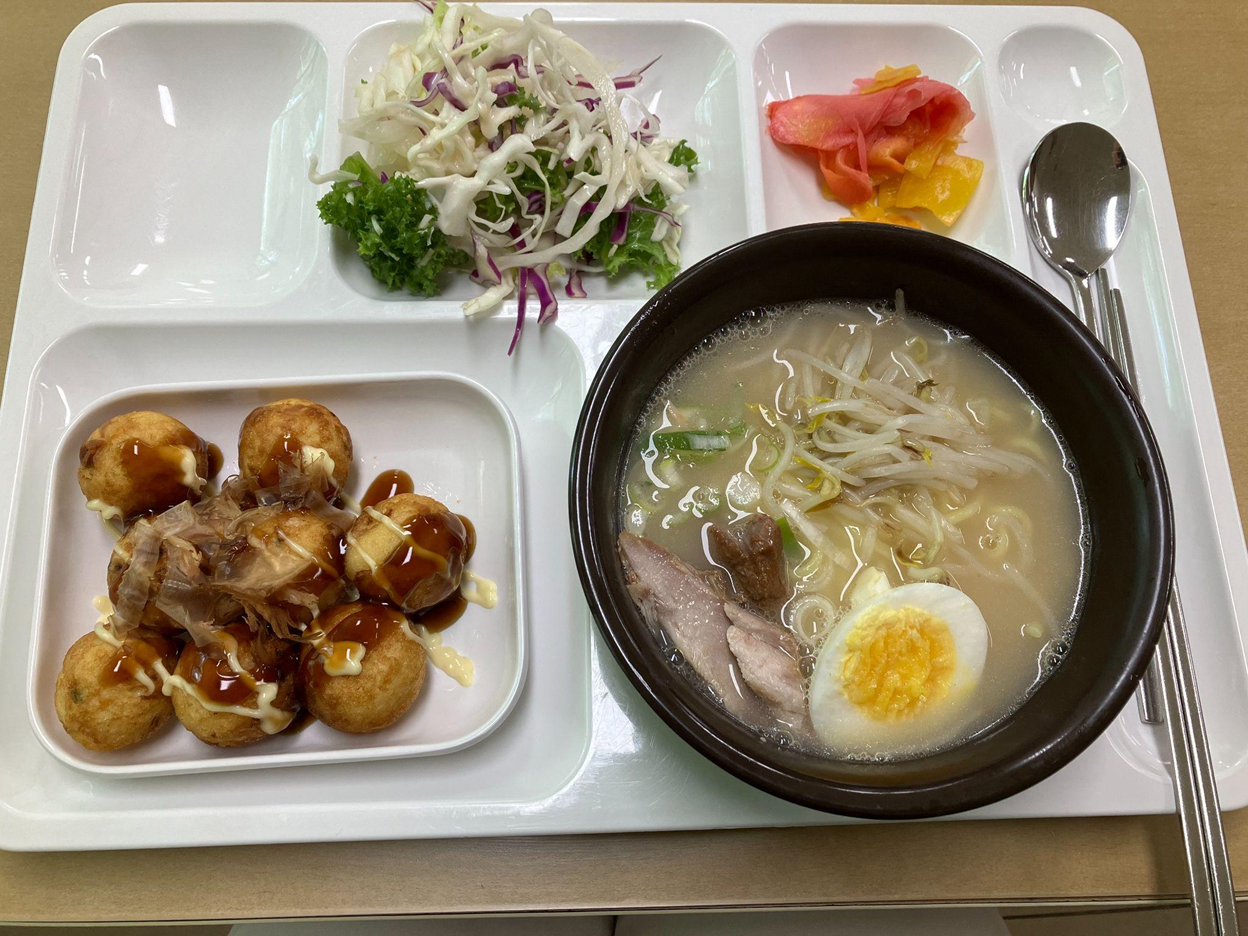
As seen in the picture, the ramen came in a savory broth with ham, half a boiled egg, green onions, and bean sprouts. If you’ve never had takoyaki before, it’s a ball of fried wheat batter, usually with a piece of squid in the center. Here, it was served with Japanese mayonnaise and takoyaki sauce, similar to a sweet Worcestershire sauce, and katsuobushi on top. The salad dressing was strawberry flavored, which was certainly new to me but still good.
In the States, a common understanding is that school cafeteria food is bad. Even if someone says that the food is good, the understanding is that it is good compared to other cafeterias, not compared to something home-cooked or from even a moderately good restaurant. When I have spoken to Korean college students and found out that they don’t eat at the campus cafeteria, their decision is not because of the quality or flavor of the food, but because of the lack of options at the cafeteria. Of course coming to another country I was prepared for differences, but I was not prepared for the difference to be that cafeteria food is good.