
Before my departure on the American Councils program, like many other eager travelers, I watched videos on YouTube and on social media channels, hoping for a glimpse of what I could expect in my day-to-day life this Summer in Kazakhstan, and further, how I could spend my precious free time. Many videos feature the Ethno-Villages and tours that are located just outside of Almaty, where visitors can don authentic Kazakh national costumes and pay to have their photos taken while dressed up in traditional settings. These costumes stood out to me as a draw for tourists, where they can wear traditional Kazakh clothing. Watching these videos, the chapan emerged as a main component of national dress, worn by both men and women alike, and could take a multitude of forms in shape, color, and fabric.
Put simply, the chapan is a long outer robe that is common across Central Asian cultures. A chapan in Uzbekistan might vary in pattern, thickness, and cut than a chapan in Kazakhstan, or Kyrgyzstan, but across the region, it is a garment that is associated with both utility and status that is closely tied to the history of nomadic life on the steppe. In Kazakh culture, the chapan is distinguished by ornamental patterns and is made in different fabrics for different climates.
Upon my arrival in Almaty, it became clear that the chapan is not relegated to special events or the confines of model yurts in Ethno-Villages, but are being integrated into the contemporary fashion scene and can be glimpsed in everyday life. As I walked around the main shopping avenues of Al-Farabi and Dostyk in Almaty, and braved the Green Bazaar for the first time, I saw many different forms of the Kazakh chapan for sale, styled with everyday clothes on people simply going to work or school. With my host mother and host sister in tow, I tried on a few with my street clothes, and became infatuated with the variations of colors, textures, and lengths that I found these robes in.
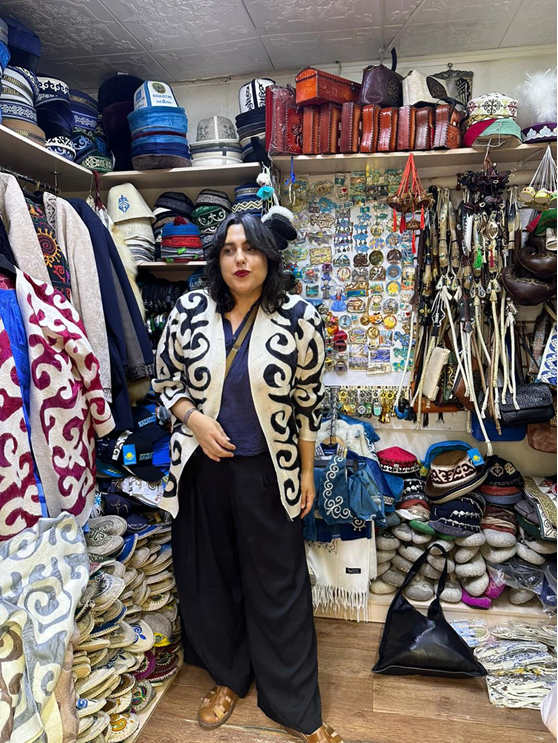
Trying on a lightweight felt and silk chapan with Kazakh ornamentation at the Green Bazaar. I was overwhelmed with the options, as there are many variations of color and pattern. Each chapan has a life of its own.
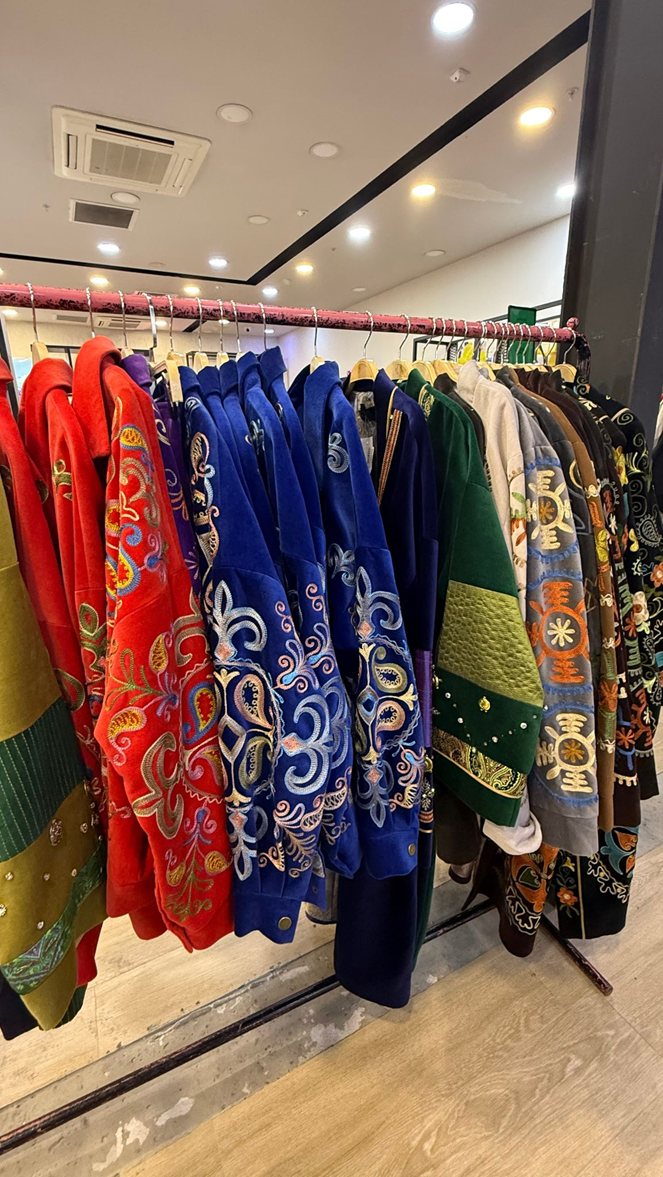
Many chapan options at the local mall in a shop that showcased local Kazakh designers. As you spend time in Kazakhstan, you find many shops that feature ethno-style by Kazakh artists.
When I found a quilted reversible short chapan in my size, and in my favorite olive shades of green, I was beside myself. My host mother insisted that she gift me this chapan, and that I think of their family and our time together every time I wear it. While smitten, I had one instantaneous thought, as a foreigner, I worried, would wearing a chapan come off as culturally insensitive? As I grappled with this question with my host sister, she assured me that wearing a chapan from a Kazakh seller would be a perfectly acceptable way to show respect to the culture that I am getting to know and appreciate everyday. As I read more about the chapan, I learned that it has historically been a part of guest treatment in Kazakh culture. In the times of Nomadic empires, guests were given a horse and an expensive chapan as a sign of honor and respect. While it’s clear, I was gifted my chapan simply for my instantaneous attraction to it, in contemporary times, wearing the Kazakh chapan over a contemporary outfit is a nod to its place within a rich tradition. As I speak Russian at the university everyday, hear Chinese spoken in popular cafes, and of course, encounter English in tourist spaces, wearing the chapan is a subtle nod to Kazakh culture and heritage, which extends well beyond the yurt and into our rapidly globalizing world.
Wearing my gifted chapan while sightseeing. Of course, my host family was thrilled to see how I wear it, and I was equally thrilled for the cool weather that allowed me the opportunity.
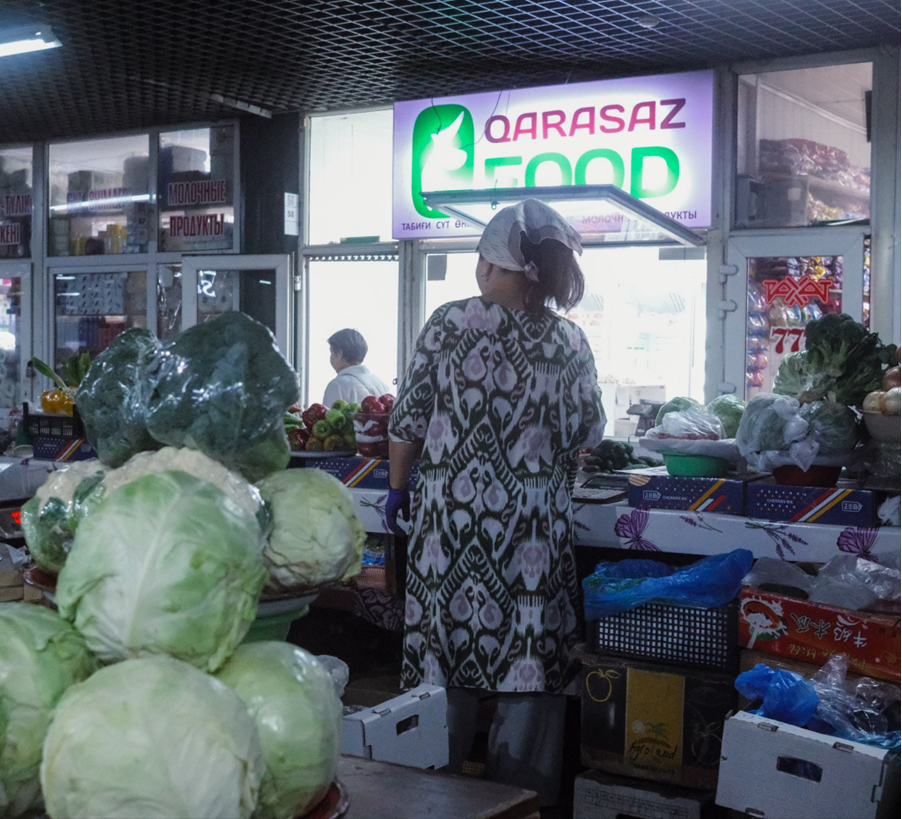
Produce seller at the Green Bazaar wearing a chapan