
This blog entry captures my experience traveling from Dushanbe to Panjakent and then into the mountainous Haft Kul, also known as the Seven Lakes, region. The journey included history, generous hospitality, unexpected challenges, local food, and many opportunities to use Tajiki, Farsi, and Uzbek in real situations. As we left Dushanbe and entered the beginning of the mountainous region, the mountain bridges and winding roads appeared around us. We stopped at a hill point. I had brought a watermelon from my room, and we sat down on the side of the road to eat it. We looked down into a very deep valley. Across from us were snowy mountains. The air was crisp and the scenery was beautiful. Eating watermelon at the start of our three-day trip felt refreshing. Everyone was excited. It was a simple moment that set the tone for the journey.
We passed through mountains and narrow curvy roads with crazy drivers rushing to pass one another in a narrow two lane road. Eventually we arrived in Panjakent, which sits in the Sughd province on the Zeravshan River and was once an ancient Sogdian town. We checked into the hotel. It was simple and comfortable. From the window, the mountains framed the skyline and gave a sense of what was ahead.
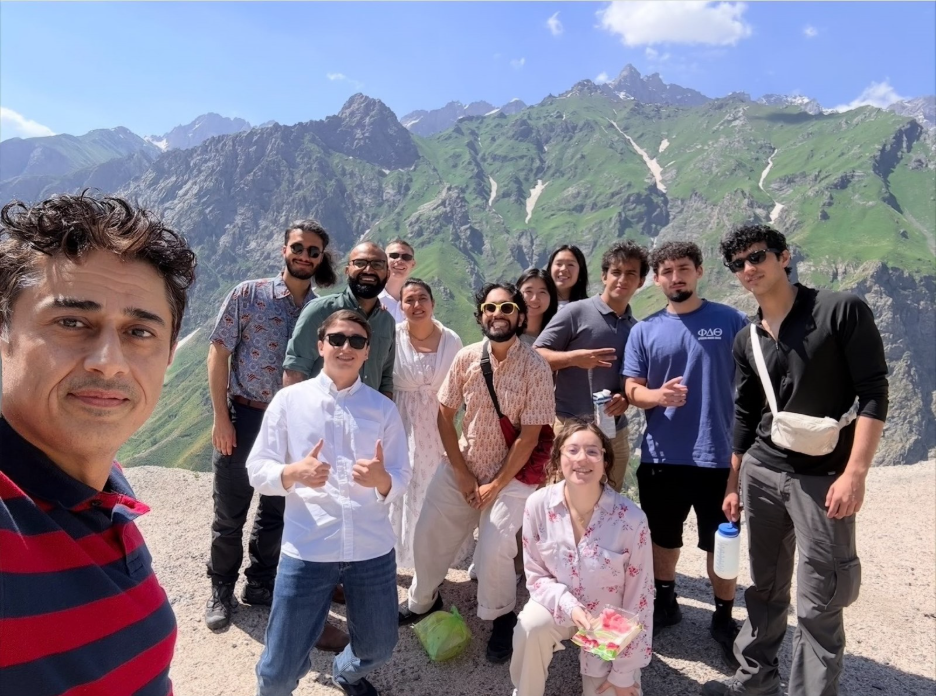
Our first stop was the Panjakent city museum, the Rudaki Republican Museum of Regional History.
The museum preserves archaeological discoveries, Soviet era documents, and Zoroastrian heritage items that highlight the pre-Islamic roots shared by Tajiks and Kurds. Its centerpiece is a Sogdian fresco depicting daily life and battles. A special hall is devoted to Rudaki and his literary legacy. Among many items, the museum also displayed samples of wines produced in Panjakent. I asked our ERLP program director Aaron about it, and he told me that Panjakent has wine manufacturing and vineyards. This was new to me. That night, I went to a local store and purchased a bottle of Panjakent wine. We did not visit vineyards as a group, but I wanted to experience this part of Panjakent on my own.
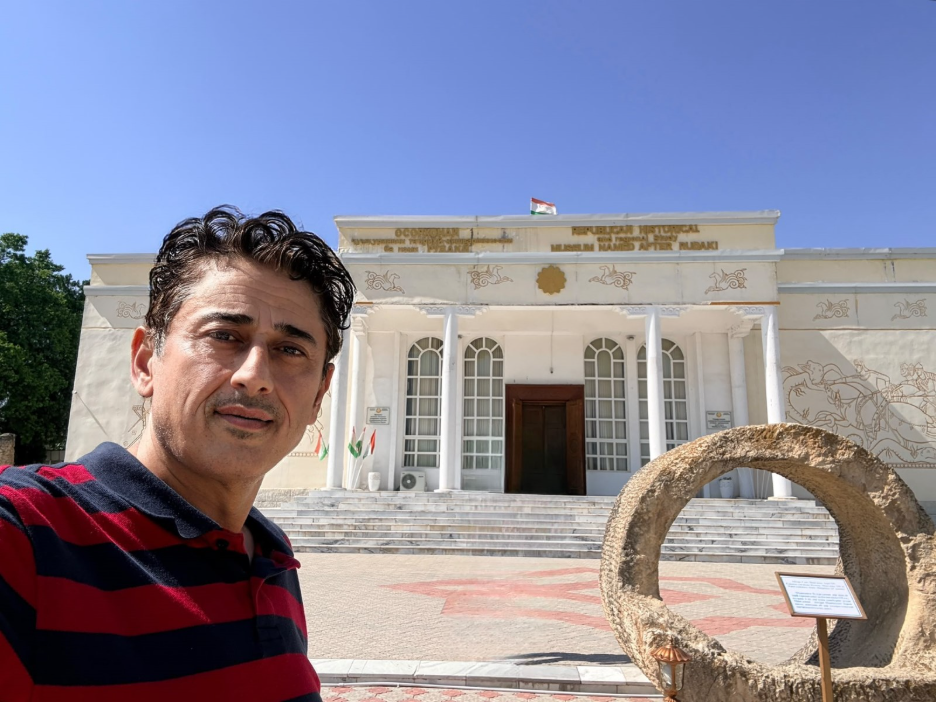
Inside the museum, I noticed Tajik texts written in Latin script. These were remnants from the Soviet period when Tajik was briefly written in Latin before switching to Cyrillic. Seeing those Latin script labels felt unusual because modern Tajik is entirely Cyrillic. The museum was fully functional, and we viewed everything without any problem.
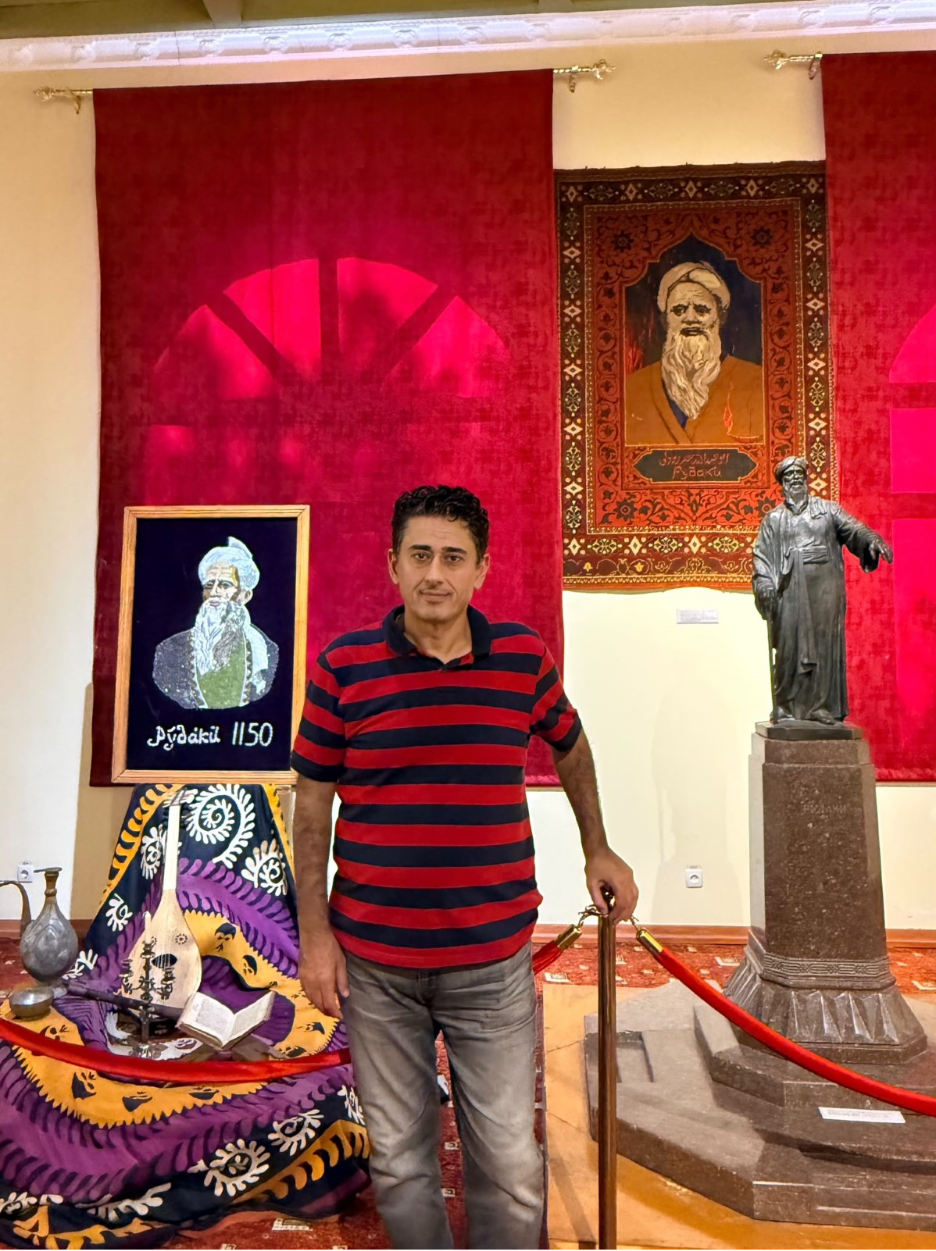
After finishing the museum visit, we continued exploring the historical landscape of the region by visiting the Sarazm archaeological site and the Sarazm museum. Sarazm is a prehistoric settlement that dates back to the fourth millennium BCE and is part of a UNESCO World Heritage listing. Archaeologists recently uncovered the tomb of a princess from Sarazm. Learning about this discovery added a new layer of significance to the region. Knowing that a royal burial had been uncovered in recent years made the historical landscape feel alive. The most striking and unsettling item in the Sarazm museum was the skeleton of the princess. Seeing her remains in the dark room created a strong and eerie feeling. Inside the museum in Sarazm, it was difficult to see because there was no electricity. The rooms were dark, and only after I opened the curtains did some sunlight enter the rooms, allowing us to see part of the exhibits. It was disappointing that such an important site did not have electricity or a generator. We tried to look at the exhibits as much as possible, but the lack of lighting made it challenging. After visiting Sarazm, we went for lunch. This is where I had my first fish experience in Panjakent and in Tajikistan. Fresh river fish was being prepared, and I decided to try it. It was simple and local. Eating fish at that moment connected me to everyday life in the region.
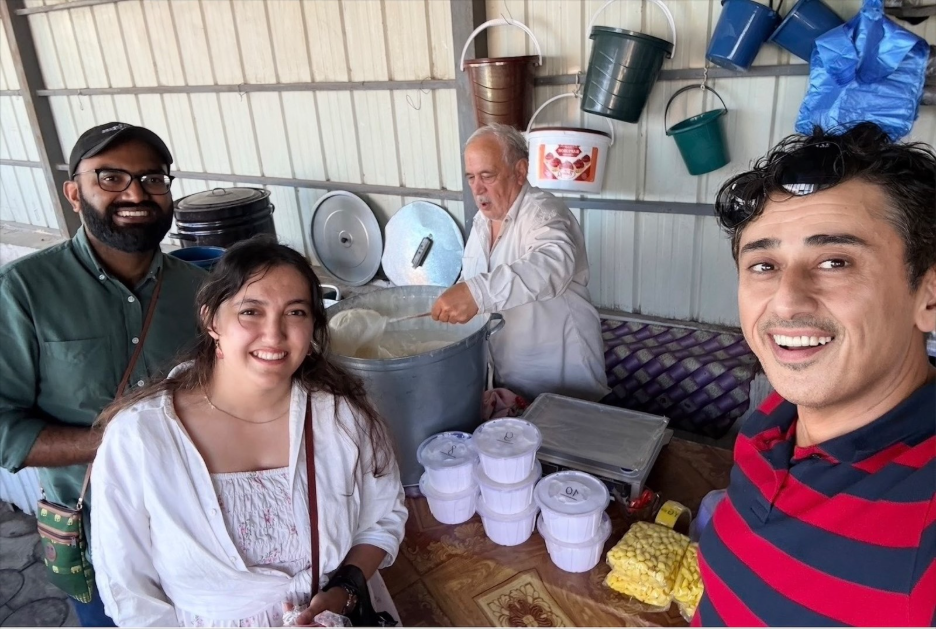
Later, in the Panjakent bazaar, we saw an old man and his granddaughter making traditional desserts. We talked with the dessert maker. I called the other students to come, and they joined us.